Micro-Habits: 5 Small Changes for a High-Performance Lifestyle: In the modern world, we are often told that “more is better.” More hustle, more goals, more sweeping life changes. But if you’ve ever set a massive New Year’s Resolution only to abandon it by February, you know that intensity is hard to maintain. The secret to a transformed lifestyle isn’t a grand gesture; it’s the micro-habit.
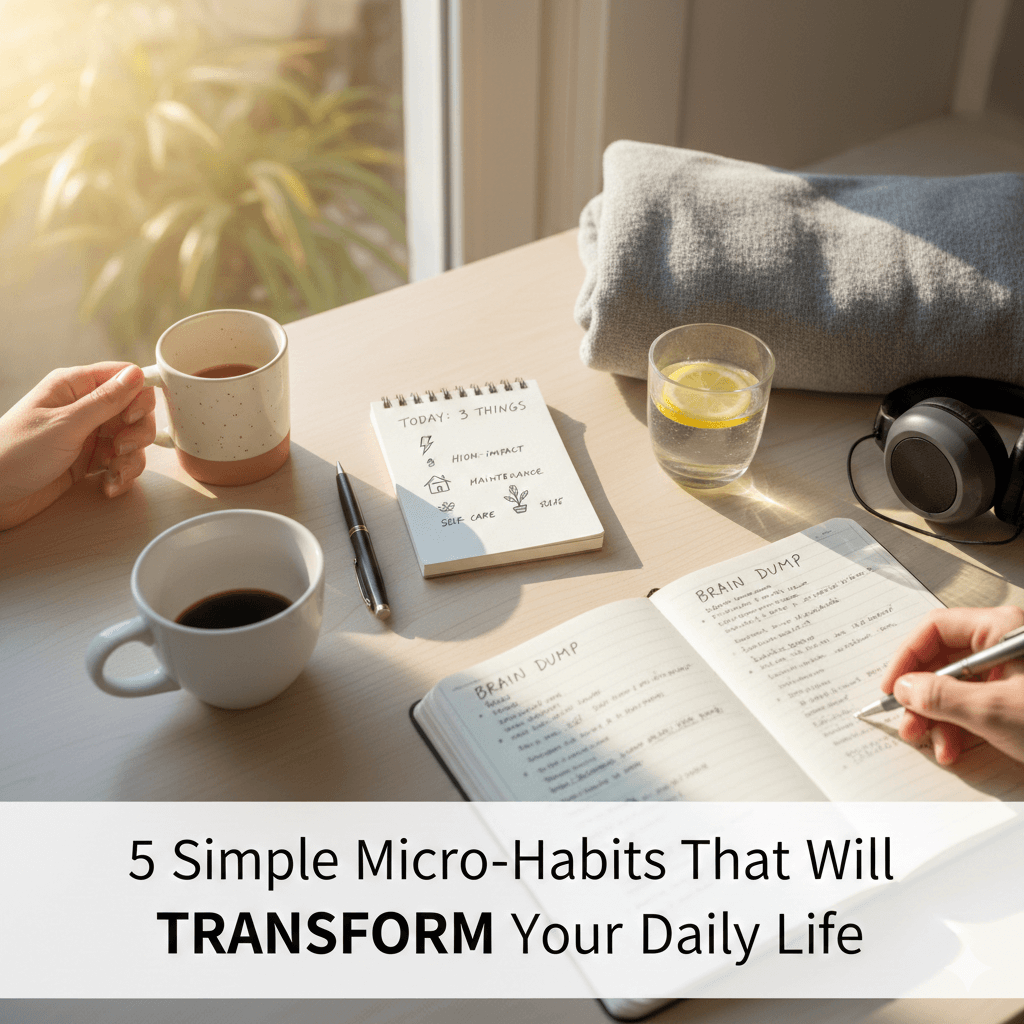
Micro-habits are the building blocks of a high-performance life. They are tiny, low-effort actions that take less than two minutes to complete but have a massive “compound effect” over time. By lowering the barrier to entry, you bypass the brain’s natural resistance to change.
Here is a deep dive into five essential micro-habits that will help you reclaim your energy, focus, and mental clarity.
1. The “One-Minute” Rule for Mental Clarity
The “One-Minute Rule” is a productivity classic for a reason: it stops “micro-stress” from accumulating. Micro-stress is the low-level anxiety caused by seeing a pile of mail on the counter, a dirty coffee mug in the sink, or an unanswered text.
How it works: If a task takes sixty seconds or less, do it immediately. * The Science: Every unfinished task creates “Open Loops” in your brain (the Zeigarnik Effect), which drains your mental energy. By closing these loops instantly, you free up “RAM” in your mind for more important creative work.
- Application: Hang up your coat the moment you walk in. File that digital receipt immediately. These small wins build “momentum,” making you feel like a person who is in control of their environment.
2. Strategic Morning Sunlight Exposure
Most of us start our day by looking at a smartphone screen. This artificial blue light confuses our internal clock. Instead, the most impactful lifestyle shift you can make is getting 5–10 minutes of natural sunlight within the first hour of waking up.
Why it matters: Sunlight triggers a timed release of cortisol (the “alertness” hormone) and sets a timer for melatonin (the “sleep” hormone) to be released about 16 hours later.
- The Health Benefit: Consistent morning light improves your mood, sharpens your focus, and—most importantly—helps you fall asleep faster at night.
- Pro-Tip: If it’s cloudy, stay outside for 15–20 minutes. Even through clouds, the photons from the sun are significantly more powerful than any indoor light bulb for regulating your biology.
3. The “Rule of Three” for Goal Setting
We often mistake “being busy” for “being productive.” A common lifestyle trap is writing a to-do list with 20 items and feeling like a failure when only five are completed.
The Solution: At the start of each day, identify your three non-negotiables.
- High Impact: One task that moves your biggest project forward.
- Maintenance: One task that keeps your life running (e.g., paying a bill).
- Self-Care: One task for your physical or mental health.
- The Psychological Shift: Completing these three items gives you a sense of “Completion Mastery.” Anything you do after these three is a “bonus,” which keeps your dopamine levels high and prevents the “burnout” associated with endless lists.
4. Embracing “Non-Sleep Deep Rest” (NSDR)
In a world addicted to stimulation, we have forgotten how to rest without a screen. Scrolling through social media is “passive consumption,” not rest. In fact, it often leaves our nervous system more frazzled than before.
The Micro-Habit: Incorporate 10 minutes of Active Rest or NSDR (Non-Sleep Deep Rest).
- How to do it: Find a quiet space, close your eyes, and focus on slow, rhythmic breathing. You aren’t trying to meditate perfectly; you are simply giving your brain a break from processing visual information.
- The Benefit: This practice lowers your heart rate and reduces “cortisol spikes.” Think of it as a “quick charge” for your brain’s battery, allowing you to return to work with a renewed perspective and better emotional regulation.
5. The Evening “Brain Dump” for Better Sleep
One of the biggest obstacles to a healthy lifestyle is poor sleep caused by “nighttime rumination”—that feeling when your brain starts listing every worry the moment your head hits the pillow.
The Ritual: Spend two minutes before bed writing down everything on your mind.
- What to write: Tomorrow’s tasks, things you’re worried about, or even a grocery list.
- The “Paper-to-Peace” Connection: Writing things down externalizes your thoughts. It tells your brain, “This information is stored safely; you don’t need to keep looping it.” * Result: This micro-habit is scientifically proven to help people fall asleep significantly faster than those who don’t externalize their thoughts.
Why These Habits Drive AdSense Success
For a blog to be profitable, it needs to be “shareable” and “saveable.” * High Search Volume: Keywords like “productivity,” “mental clarity,” and “morning routine” are highly searched.
- High Retention: When readers find actionable advice they can use immediately (like the One-Minute Rule), they stay on your page longer, which increases your “Session Duration”—a key metric Google uses to rank content.
- Niche Authority: By combining health (sunlight), productivity (Rule of Three), and mental wellness (Brain Dump), you position your blog as a holistic lifestyle resource.
Conclusion: Consistency Beats Intensity
You don’t need to change your entire life in twenty-four hours. You just need to change the next five minutes. By adopting these micro-habits, you aren’t just “getting more done”—you are designing a lifestyle that supports your long-term health and happiness.
Start with just one of these today. Which one resonates with you the most?