

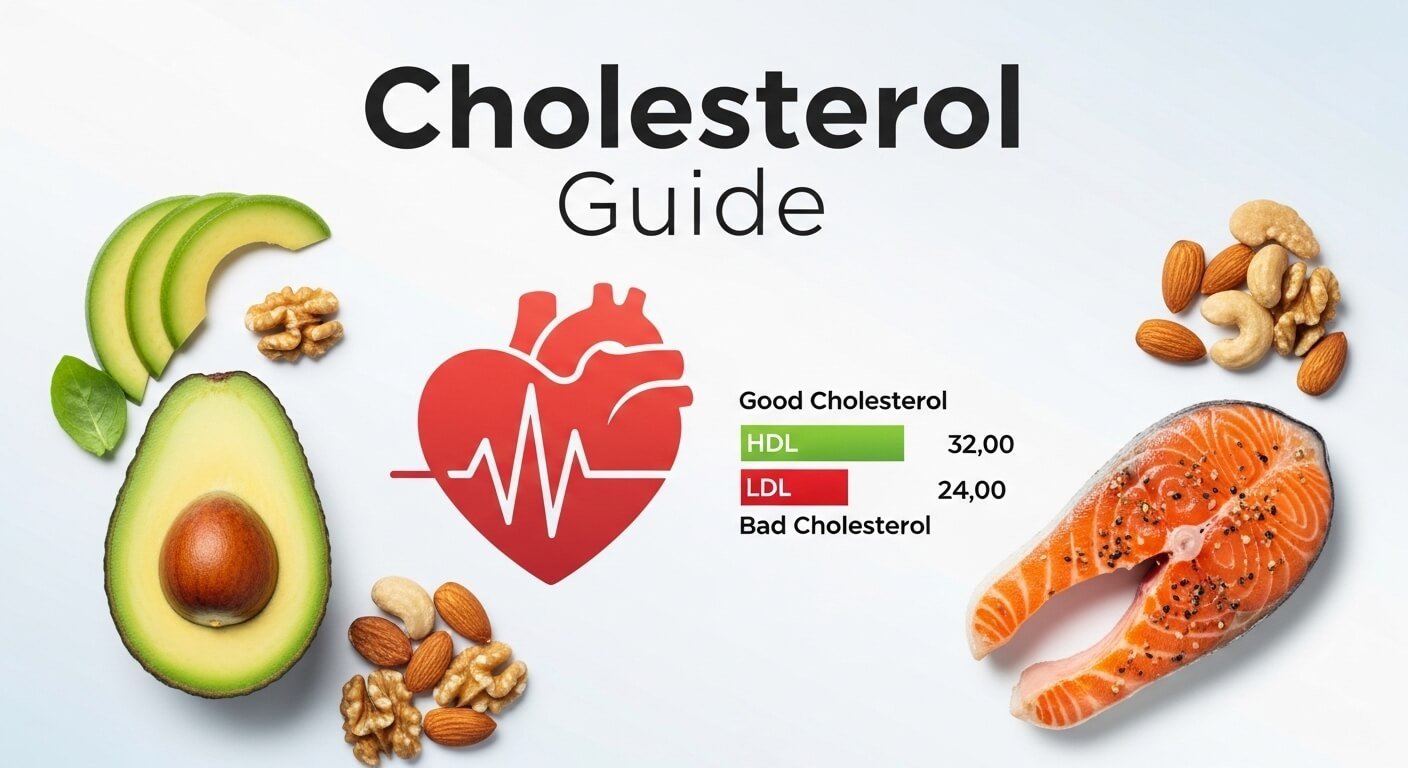
Cholesterol Explained: Good vs Bad & How to Lower It Naturally: Cholesterol is one of the most talked-about health topics, yet also one of the most widely misunderstood. It is simultaneously essential to life and, when out of balance, a major driver of heart disease — the world’s leading cause of death. Understanding what cholesterol is, how it behaves in the body, what drives unhealthy levels, and how to manage it naturally and medically empowers you to make choices that can add years to your life.
What Is Cholesterol?
Cholesterol is a waxy, fat-like substance found in every cell of the body. It is essential for producing cell membranes, manufacturing hormones including estrogen, testosterone, and cortisol, making vitamin D, and producing bile acids needed for digestion. The body produces all the cholesterol it needs in the liver; dietary cholesterol contributes only modestly to blood levels in most people, though this varies between individuals.
Cholesterol does not dissolve in blood. To travel through the bloodstream, it must be packaged into protein-wrapped particles called lipoproteins. The two most important types are low-density lipoprotein (LDL) and high-density lipoprotein (HDL).
LDL vs. HDL: The Key Distinction
LDL Cholesterol
LDL — often called ‘bad’ cholesterol — carries cholesterol from the liver to cells throughout the body. When there is excess LDL, it can deposit in the walls of arteries, where it becomes oxidized and triggers an inflammatory response. This leads to the formation of fatty plaques — a process called atherosclerosis — that narrows and stiffens arteries, restricting blood flow and dramatically increasing the risk of heart attack and stroke.
HDL Cholesterol
HDL — the ‘good’ cholesterol — performs the opposite function. It scavenges excess cholesterol from the bloodstream and artery walls and transports it back to the liver for reprocessing or excretion. Higher HDL levels are associated with a lower risk of heart disease. HDL acts as a kind of cholesterol cleanup crew, counteracting some of the damage done by elevated LDL.
Triglycerides
Triglycerides are another type of fat in the blood that are measured alongside cholesterol in a standard lipid panel. They are a form of stored energy derived primarily from excess calories, sugars, and alcohol. Elevated triglycerides, particularly when combined with low HDL and high LDL, significantly increase cardiovascular risk.
Understanding Your Numbers
A standard lipid panel measures total cholesterol, LDL, HDL, and triglycerides. Optimal targets for most adults include total cholesterol below 200 mg/dL, LDL below 100 mg/dL (or below 70 mg/dL for high-risk individuals), HDL above 60 mg/dL, and triglycerides below 150 mg/dL. However, context matters enormously. Risk assessment should consider the full clinical picture including age, sex, blood pressure, smoking status, and other risk factors.
More recently, clinicians have begun using additional markers like Lp(a) — lipoprotein(a) — and apolipoprotein B (ApoB) for more refined cardiovascular risk assessment, particularly in individuals with borderline cholesterol levels or strong family histories of heart disease.
What Causes High LDL Cholesterol?
Diet
Saturated fats — found primarily in red meat, full-fat dairy, butter, and tropical oils like coconut and palm oil — raise LDL cholesterol. Trans fats (partially hydrogenated oils), while largely phased out of the food supply in many countries, still appear in some processed foods and are particularly harmful, raising LDL and lowering HDL simultaneously. Dietary cholesterol from animal products has a more modest and variable effect on blood cholesterol.
Genetics
Familial hypercholesterolemia (FH) is an inherited condition that causes very high LDL levels from birth due to a genetic mutation affecting how the liver processes LDL. It affects approximately 1 in 250 people and dramatically increases lifetime cardiovascular risk if untreated.
Lifestyle Factors
Physical inactivity, obesity, smoking, and excessive alcohol consumption all adversely affect cholesterol levels. Hypothyroidism, kidney disease, and certain medications can also raise LDL.
Lifestyle Strategies to Improve Cholesterol
Adopt a Heart-Healthy Diet
Reducing saturated fat intake and replacing it with unsaturated fats can meaningfully lower LDL. Replace butter and lard with olive oil, avocado oil, and nut butters. Increase intake of omega-3 rich fatty fish like salmon, mackerel, and sardines. Add more soluble fiber — found in oats, beans, barley, fruits, and vegetables — which binds cholesterol in the gut and prevents its absorption. Plant sterols and stanols, added to some fortified foods, also block cholesterol absorption.
Exercise Regularly
Regular aerobic exercise is one of the most effective ways to raise HDL cholesterol. It can increase HDL by 5 to 10 percent with consistent training. Exercise also reduces LDL particle number and helps lower triglycerides. Aim for at least 150 minutes of moderate-intensity aerobic activity per week.
Lose Excess Weight
Being overweight, particularly carrying excess abdominal fat, tends to raise LDL and triglycerides while lowering HDL. Even losing 5 to 10 pounds can produce measurable improvements in the lipid profile.
Quit Smoking
Smoking lowers HDL cholesterol and damages artery walls, making them more susceptible to cholesterol deposits. Quitting smoking is associated with a significant increase in HDL within weeks, and over time dramatically reduces overall cardiovascular risk.
Limit Refined Carbohydrates and Sugar
High intake of refined carbohydrates and added sugars is a major driver of elevated triglycerides and low HDL — a pattern called atherogenic dyslipidemia that is increasingly recognized as a significant cardiovascular risk factor. Replacing refined carbs with whole grains, vegetables, and legumes can dramatically improve the triglyceride-to-HDL ratio.
When Is Medication Needed?
Lifestyle changes are the cornerstone of cholesterol management, but for many individuals — particularly those with familial hypercholesterolemia, established cardiovascular disease, or persistently high LDL despite lifestyle modifications — medication is necessary. Statins are the most widely prescribed and extensively studied cholesterol-lowering medications. They inhibit an enzyme in the liver responsible for cholesterol production and can reduce LDL by 30 to 50 percent.
Other medications include ezetimibe (which reduces cholesterol absorption), PCSK9 inhibitors (highly effective injectable biologics for very high-risk patients), bile acid sequestrants, and fibrates (which primarily lower triglycerides). The decision to start medication should always involve a thorough risk-benefit discussion with your physician.
The Role of Inflammation
It is increasingly recognized that inflammation plays a central role in the development of atherosclerosis, often independent of cholesterol levels. High-sensitivity C-reactive protein (hs-CRP) is a marker of systemic inflammation and a predictor of cardiovascular risk. An anti-inflammatory lifestyle — rich in colorful vegetables, fruits, omega-3s, and regular exercise — is therefore doubly protective against heart disease.
Conclusion
Cholesterol is a vital substance that becomes problematic primarily when LDL is elevated, HDL is low, and inflammation is present. The great news is that your lifestyle choices have a profound impact on all of these factors. Whether you are working to improve a borderline result or managing an established risk, a combination of dietary changes, regular exercise, and, when necessary, medication can dramatically reduce your cardiovascular risk and add healthy years to your life.
Disclaimer: This article is for informational purposes only and does not constitute medical advice. Always consult a qualified healthcare provider for personal health guidance.