How Credit Scores Work & How to Improve Yours Fast: Your credit score is a three-digit number that wields enormous influence over your financial life. It determines whether you qualify for a mortgage, what interest rate you pay on loans and credit cards, whether you can rent an apartment, and in some cases, whether you get a job offer.
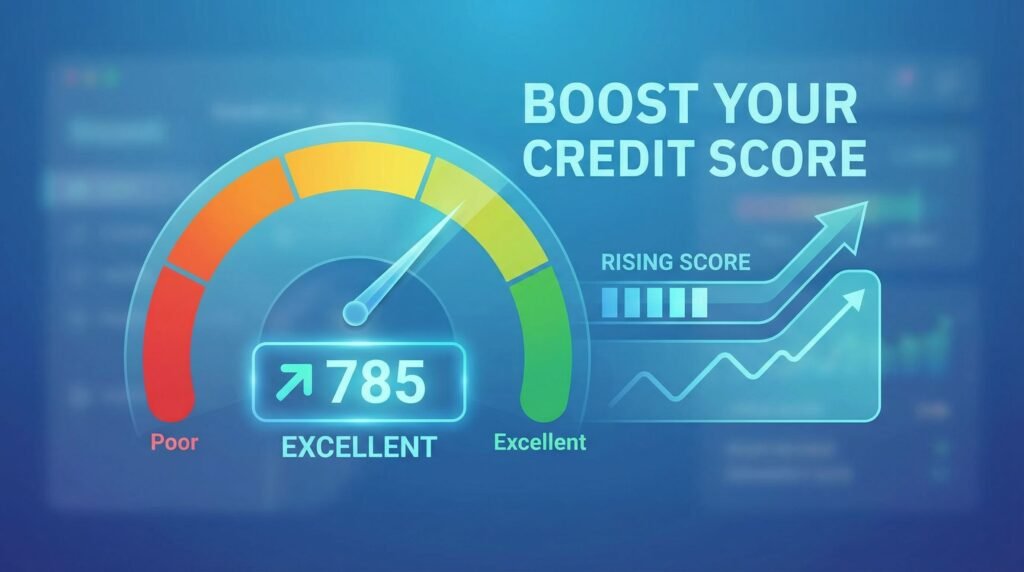
A difference of 50 points on a credit score can mean the difference between qualifying for a home loan and being denied, or between a 6 percent mortgage rate and a 7.5 percent rate — potentially tens of thousands of dollars over the life of the loan.
Despite its importance, credit scores remain poorly understood by many people. This comprehensive guide demystifies the credit scoring system, explains exactly what affects your score, and provides actionable strategies to improve it.
What Is a Credit Score?
A credit score is a numerical representation of your creditworthiness — essentially, how reliably you have repaid borrowed money in the past and how likely you are to repay future debt on time. Lenders use credit scores to quickly assess the risk of lending to you.
The most widely used credit scoring model is the FICO score, developed by the Fair Isaac Corporation. FICO scores range from 300 to 850. The VantageScore, developed jointly by the three major credit bureaus (Equifax, Experian, and TransUnion), also ranges from 300 to 850. Most lenders primarily use FICO scores, though VantageScore is increasingly referenced.
Credit Score Ranges
FICO score ranges are typically categorized as follows: Exceptional (800 to 850) — you will qualify for the best rates and terms available; Very Good (740 to 799) — you will qualify for excellent rates and terms; Good (670 to 739) — you will qualify for most loans at competitive rates; Fair (580 to 669) — you may qualify for some loans but at higher interest rates; Poor (below 580) — you will struggle to qualify for most credit, or will pay very high rates.
The national average FICO score in the United States has generally been in the mid-700s in recent years, meaning the average American has ‘good’ credit. However, a significant portion of the population falls below 670, facing meaningfully higher borrowing costs.
The Five Factors That Determine Your FICO Score
Payment History (35%)
The single most important factor in your credit score is whether you pay your bills on time. Every late payment — even one that is only 30 days past due — can significantly damage your score. A collection account, bankruptcy, or foreclosure is even more damaging and can remain on your credit report for seven to ten years. Conversely, a long history of on-time payments is the most powerful positive influence on your score.
Credit Utilization (30%)
Credit utilization measures how much of your available revolving credit (primarily credit cards) you are currently using. If you have a total credit card limit of $10,000 and carry a total balance of $3,000, your utilization rate is 30 percent. Lower utilization is better. Experts generally recommend keeping utilization below 30 percent, and ideally below 10 percent, for the best scores. High utilization signals financial stress to lenders, even if you pay your bills on time.
Length of Credit History (15%)
The longer your credit history, the better. This factor considers the age of your oldest account, the age of your newest account, and the average age of all accounts. This is why closing old credit card accounts — even ones you do not use — can sometimes hurt your score: it reduces the average age of your accounts and removes available credit, potentially increasing your utilization ratio.
Credit Mix (10%)
Having a mix of different types of credit — credit cards (revolving credit), auto loans, mortgages, and student loans (installment loans) — can positively influence your score. Lenders want to see that you can responsibly manage different types of credit. You should not open accounts you do not need simply to improve your credit mix, but having a diverse mix naturally over time is beneficial.
New Credit (10%)
Every time you apply for a new credit account, the lender performs a hard inquiry on your credit report, which temporarily lowers your score by a few points. Multiple hard inquiries in a short period can signal financial distress. Rate shopping for mortgages, auto loans, and student loans within a focused window (typically 14 to 45 days depending on the scoring model) is treated as a single inquiry, so do not avoid comparison shopping out of fear of credit score impact.
How to Check Your Credit Score and Report
You are entitled to one free credit report per year from each of the three major bureaus (Equifax, Experian, and TransUnion) through AnnualCreditReport.com — the only government-mandated free credit report site. Reviewing all three reports for errors is essential, as errors are more common than most people realize and can significantly depress your score.
For ongoing score monitoring, many credit cards, banks, and personal finance apps now offer free access to your credit score (usually VantageScore or FICO) as a complimentary service. Monitoring your score regularly allows you to track progress and catch suspicious activity that might indicate identity theft.
Proven Strategies to Improve Your Credit Score
Pay Every Bill On Time, Every Time
Since payment history is 35 percent of your score, nothing improves your score more reliably over time than a perfect payment record. Set up autopay for at least the minimum payment on every account so you never miss a payment due to forgetfulness. Even one 30-day late payment can drop your score by 50 to 100 points.
Pay Down Credit Card Balances
Reducing your credit utilization ratio is one of the fastest ways to improve your score. Unlike payment history (which reflects years of behavior), utilization is recalculated monthly based on your current balances. Paying down a high balance can raise your score within one to two billing cycles. If possible, pay your credit card balance in full each month — this maximizes the credit history benefit while keeping utilization near zero.
Do Not Close Old Accounts
Resist the urge to close credit card accounts you no longer use, particularly old ones. Closing an account reduces your available credit (increasing utilization) and reduces the average age of your accounts. If you have a card with no annual fee, simply keep it open and make a small purchase on it occasionally to keep it active.
Dispute Credit Report Errors
Review your credit reports from all three bureaus for inaccuracies: accounts you do not recognize, incorrect late payment records, accounts listed as open that you have closed, or incorrect balances. Dispute any errors directly with the credit bureau (online, by mail, or by phone) and with the original creditor. The bureau is required to investigate and respond within 30 days. Correcting errors can produce rapid, significant score improvements.
Become an Authorized User
If a family member or close friend has a credit card with a long history of on-time payments and low utilization, being added as an authorized user on that account can boost your score without you ever using the card. The account’s positive history is added to your credit report. This is particularly useful for people building credit from scratch.
Consider a Secured Credit Card
If you have poor or no credit and are struggling to qualify for regular credit products, a secured credit card — backed by a cash deposit that serves as your credit limit — can be an effective credit-building tool. Use it for small purchases and pay the balance in full each month. After 12 to 18 months of responsible use, many secured cards convert to regular unsecured cards and return your deposit.
How Long Does Credit Improvement Take?
Some changes produce results quickly: paying down a large credit card balance can improve your score within one to two months. Disputing and correcting a major error can produce improvement within 30 to 60 days. Building a strong credit history through consistent on-time payments, however, takes time — typically one to two years of responsible behavior to meaningfully move a poor score into the good range, and several years to achieve excellent scores.
Be patient and consistent. Credit scores reward sustained responsible behavior over time, and the long-term payoff in lower interest rates and better financial opportunities is well worth the effort.
Conclusion
Your credit score is one of the most impactful financial numbers in your life, but it is not fixed. It is a reflection of your financial behavior, and behavior can change. By understanding exactly what drives your score and taking consistent, strategic action — paying on time, reducing utilization, protecting your history, and monitoring for errors — you can build excellent credit and unlock the financial opportunities and lower borrowing costs that come with it.
Disclaimer: This article is for informational and educational purposes only and does not constitute financial, investment, or legal advice. Always consult a qualified financial advisor before making any financial decisions.