How to Get Out of Debt Fast: Proven Strategies That Work: Debt is one of the most significant obstacles to financial freedom, and it affects tens of millions of people across all income levels. Credit card balances, student loans, car payments, personal loans, and medical bills can accumulate rapidly and feel impossible to escape.
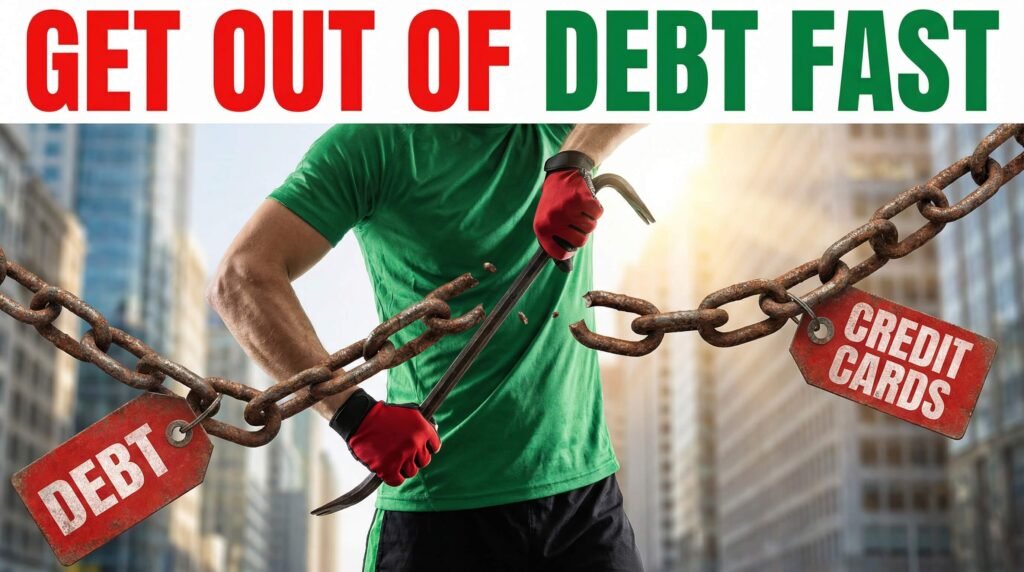
The interest charges compound relentlessly, the minimum payments seem to make no dent in the principal, and the psychological weight of owing money can be debilitating.
But debt is not a life sentence. With the right strategy, consistent effort, and a clear plan, almost anyone can eliminate debt — even large amounts of it — in a meaningful timeframe. This guide presents the most effective, evidence-backed strategies for getting out of debt faster and the psychological and practical steps to make it happen.
Why Debt Is So Difficult to Escape
The fundamental reason debt feels inescapable is compound interest working against you. When you carry a credit card balance at 20 to 29 percent APR — which is common for many cards — the interest charges add up to thousands of dollars per year on even a modest balance. A $5,000 credit card balance at 24 percent APR making only minimum payments can take over 15 years to pay off and cost more than $7,000 in total interest — meaning you pay more than double the original balance.
Minimum payments are deliberately designed by credit card companies to maximize the interest they collect. They keep your balance just high enough that interest keeps accruing while giving you the illusion of making progress. Escaping this trap requires paying significantly more than the minimum — ideally as much as possible above the minimum.
Step 1: Know Exactly What You Owe
Before you can attack debt, you need a complete and honest picture of your financial obligations. List every debt you carry: the creditor, the current balance, the interest rate (APR), and the minimum monthly payment. This exercise can be uncomfortable, but it is essential. Financial clarity, even when the numbers are painful, is always better than avoidance.
Organize this list by interest rate, highest to lowest. This structure forms the basis for the avalanche method described below. Also calculate your total debt load — seeing the combined number gives you a concrete goal to work toward.
Step 2: Create a Lean Budget
Getting out of debt fast requires directing as much money as possible toward debt repayment. This means creating a budget that distinguishes between essential expenses (housing, utilities, groceries, transportation, insurance, minimum debt payments) and discretionary spending (dining out, subscriptions, entertainment, shopping). For the duration of your debt payoff journey, discretionary spending needs to be reduced aggressively.
This does not mean you must live miserably. But it does mean being intentional and prioritizing. For every discretionary dollar you redirect toward debt, you are effectively earning a guaranteed return equal to your interest rate. Paying off a credit card at 22 percent APR is like earning a guaranteed 22 percent return — better than virtually any investment available.
Step 3: Choose Your Payoff Strategy
The Avalanche Method
The debt avalanche method directs all extra repayment money toward the debt with the highest interest rate while making minimum payments on all others. Once the highest-rate debt is eliminated, that payment is redirected to the next highest-rate debt, and so on — creating a cascading effect known as a debt avalanche.
The avalanche method is mathematically optimal. It minimizes the total interest paid over the course of the payoff and typically eliminates debt faster than any other approach. It is the recommended method for people who are strongly motivated by numbers and efficiency.
The Snowball Method
The debt snowball method, popularized by personal finance educator Dave Ramsey, targets debts from smallest balance to largest, regardless of interest rate. Extra payments go to the smallest debt first; when it is eliminated, that payment is rolled into the next smallest. The mathematical cost of this approach — slightly more total interest paid — is real but often modest.
The snowball method works powerfully for people who need psychological wins to stay motivated. Eliminating smaller debts quickly creates momentum, confidence, and a sense of progress that keeps people engaged with the payoff plan. Research in behavioral economics supports its effectiveness for those who struggle with motivation and consistency.
Which Method Should You Choose?
If the difference in total interest between the two methods for your specific debts is large, choose the avalanche. If the difference is small, or if you know that psychological momentum is important for you, choose the snowball. The best method is the one you will actually stick with. A consistent snowball beats an abandoned avalanche every time.
Step 4: Find More Money to Pay Toward Debt
Increase Your Income
Increasing income is the most powerful accelerant for debt payoff. Side hustles, freelance work, part-time employment, selling unused possessions, overtime hours, and negotiating a salary increase are all viable strategies. Even an extra $200 to $500 per month directed entirely toward high-interest debt can dramatically shorten your payoff timeline and save thousands in interest.
Reduce Fixed Expenses
Review your recurring expenses for opportunities to reduce costs. Negotiating lower rates on insurance, internet, and phone bills, refinancing high-rate loans, canceling unused subscriptions, and finding a less expensive housing situation are all ways to free up cash for debt repayment. Some of these changes require a one-time effort but produce monthly savings indefinitely.
Use Windfalls Wisely
Tax refunds, work bonuses, gifts, inheritance, and other windfalls are opportunities to make a significant dent in your debt. Rather than treating a tax refund as bonus spending money, commit to directing all or most of it toward your highest-priority debt.
Step 5: Consider Debt Relief Tools
Balance Transfer Credit Cards
If you carry high-interest credit card debt and have good credit, a balance transfer card offering a 0 percent introductory APR period (typically 12 to 21 months) can save significant interest. Transferring a balance to such a card and aggressively paying it down during the promotional period can save hundreds or thousands of dollars. Read the fine print carefully: balance transfer fees (typically 3 to 5 percent of the transferred amount), what happens when the promotional period ends, and the terms of the new card.
Personal Loan Refinancing
If you have multiple high-interest debts, a personal loan with a lower fixed interest rate may allow you to consolidate them into a single, more manageable payment at a lower rate. This debt consolidation strategy simplifies repayment and can reduce total interest cost, but only if you do not accumulate new credit card debt after consolidating.
Nonprofit Credit Counseling
Nonprofit credit counseling agencies (look for NFCC members) can negotiate with creditors on your behalf to reduce interest rates and establish manageable repayment plans through a Debt Management Plan (DMP). This is not debt settlement (which is different and potentially harmful to credit) — it is a structured repayment arrangement that can make high-interest debt more manageable.
Step 6: Stay Motivated for the Long Term
Debt payoff is a marathon, not a sprint. For large debt loads, it may take months or years. Staying motivated over that timeframe requires deliberate strategies. Track your progress visually — a debt payoff chart on your wall or a spreadsheet that shows your balance declining can be powerfully motivating. Celebrate milestones: every debt eliminated, every $5,000 of principal paid down, every interest rate conquered.
Find community: online forums, personal finance communities, and accountability partners who are on similar journeys can provide encouragement, advice, and the reminder that you are not alone.
Avoiding New Debt
Getting out of debt is only half the battle — avoiding falling back into it is equally important. Address the underlying habits and circumstances that created the debt in the first place. Build your emergency fund simultaneously with debt payoff so that unexpected expenses do not force you back onto credit cards. Develop a sustainable budget that covers your lifestyle without relying on debt. Cut up cards you cannot control, or use them only for expenses you pay in full each month.
Conclusion
Debt is defeatable. Millions of people have eliminated tens or hundreds of thousands of dollars of debt through disciplined, strategic effort. The path requires clarity, sacrifice, strategy, and persistence — but the destination, the feeling of being debt-free and financially free, is worth every sacrifice. Make a plan today, commit to it completely, and let the momentum of your progress carry you through.
Disclaimer: This article is for informational and educational purposes only and does not constitute financial, investment, or legal advice. Always consult a qualified financial advisor before making any financial decisions.